Effective protection is about habits, not complexity.
You Must Use Strong, Unique Passwords
This sounds so simple…But how often do we do it! Passwords are your first line of defence to protect your personal data online
Best practices:
- Use a unique password for every account
- Avoid personal information
- Use long passphrases
- Store passwords in a secure password manager..Not on a sticky note!
Enable Multi-Factor Authentication (MFA)
MFA adds a second verification step, such as a code or app approval.
This significantly reduces the risk of account takeover.
Secure Your Internet Connection
Always assume unsecured connections are unsafe.
Steps to take:
- Avoid online banking on public Wi-Fi
- Use encrypted home networks
- Protect mobile connections
A VPN encrypts your internet traffic and protects sensitive data in transit.
Keep Devices Updated
BE ALERT TO SCAMS
Before clicking or responding
Verify sender address
Avoid any urgency
Just hover over senders email address to verify it
You can always contact your bank via official channels
Frequently Asked Questions About How to Protect your Personal Data Online
Is my personal data really at risk?
Yes. Anyone who uses the internet is a potential target. Cyber criminals do not discriminate by age income or address.
Is online banking safe?
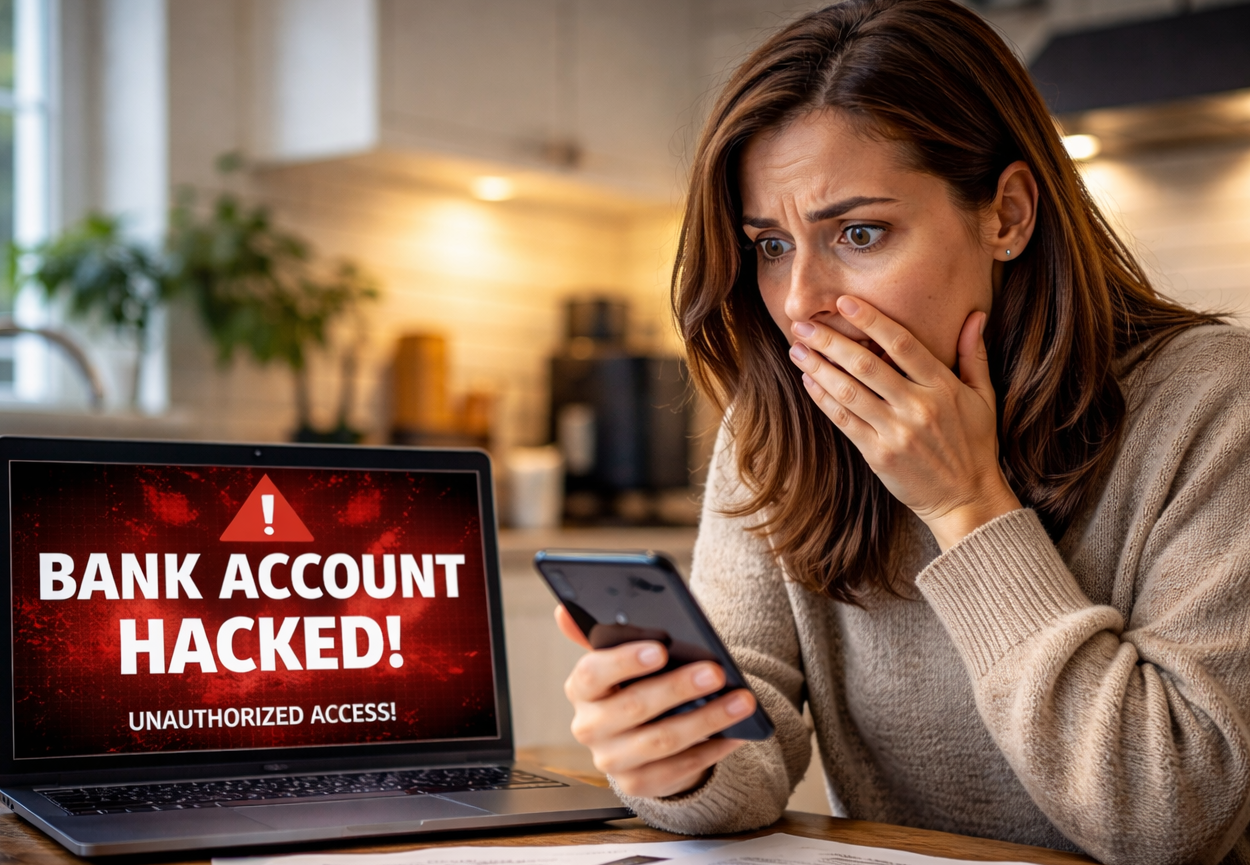
Online banking can be safe if proper security measures are used. Problems occur when users access accounts on unsecured networks or fall for common phishing scams.
What happens if my data is stolen?
You may face financial loss, identity theft, account lockouts, and long recovery processes. Early detection helps limit damage.
Do I need special software to stay safe?
You need a combination of habits and tools, such as password managers, security updates, and encrypted connections.
Can a VPN really help protect personal data?
Yes. A VPN encrypts your internet traffic, making it unreadable to attackers—especially on public or shared networks. We use and recommend ADGUARD to keep our data safe
Simple Daily Habits That Reduce Risk
Small actions make a big difference.
- Log out of accounts after use
- Lock devices when not in use
- Avoid saving banking details in browsers
- Review bank statements regularly
- Monitor account alerts
Why Prevention Is Better Than Recovery
Recovering from data theft is costly and stressful. Prevention is far easier.
Benefits of proactive protection:
- Reduced financial risk
- Peace of mind
- Greater confidence online
- Protection for your family
Protect Your Personal Data Online and Take Control of Your Online Safety
Protecting your personal data online is one of the most important responsibilities in today’s digital world. Cyber criminals are persistent, organised, and increasingly sophisticated—but most attacks succeed because of simple mistakes.
By securing your internet connections, protecting your passwords, staying alert to scams, and using reliable security tools, you can dramatically reduce your risk.
Your personal life, finances, and identity are worth protecting.
Why Put it off? Stay Safe Online Starting Today
Do not wait until your data is stolen to take action. Start building safer online habits now. Secure your connections, protect your accounts, and take control of your digital security today.

About The Author