


Why Cyber Security Is No Longer Optional
Cyber security for small business is no longer a “nice to have.” It is a fundamental requirement for survival in today’s digital economy. Small businesses are increasingly targeted by hackers, scammers, and cyber criminals because they often lack the resources, training, and safeguards of larger organisations.
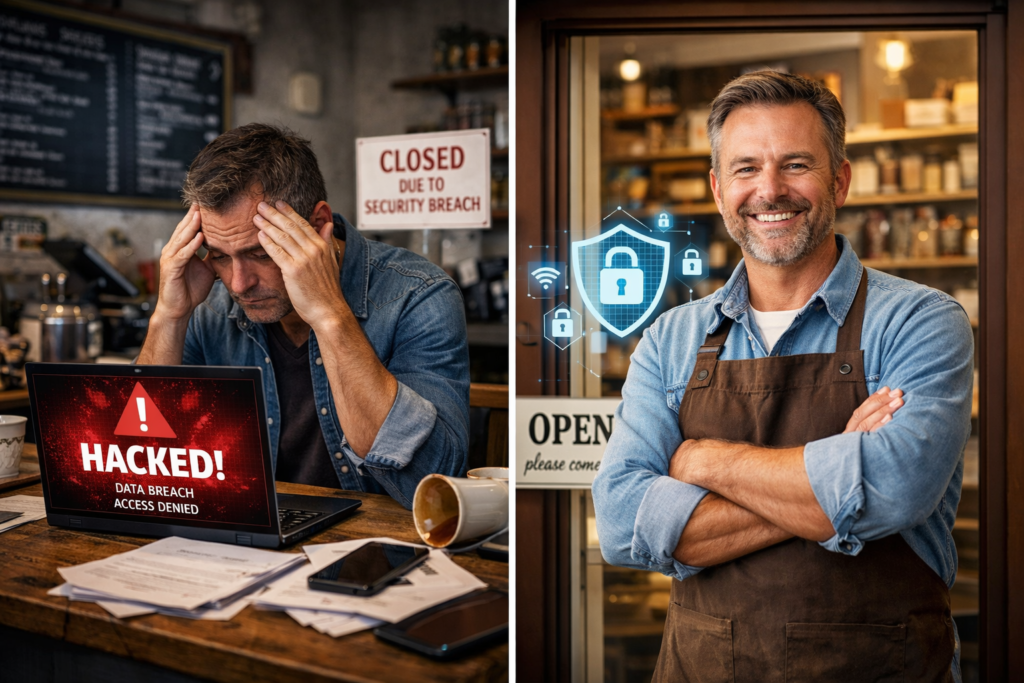
A single cyber attack can cripple your business overnight. Stolen customer data, drained bank accounts, locked systems, and reputational damage can take years…if ever to recover from. Unfortunately many small businesses close permanently after a serious data breach.
This article explains why cyber security matters for your small businesses, and highlights the devastating consequences of data theft, and the practical steps you can take to protect your data, finances, and reputation.
Why Small Businesses Are Prime Targets for Cyber Crime


Many small business owners assume hackers only target large corporations. This belief is dangerously wrong.
Cyber criminals actively seek out small businesses because:
- Security systems are often weak or outdated
- Employees may lack cyber awareness training
- Valuable data is still collected and stored
- Attacks are less likely to be detected quickly
Hackers know that even a small business can provide access to payment details, login credentials, client information, and connected suppliers.
In short, small businesses are seen as easy entry points with high reward.
What Types of Business Data Are at Risk?
When cyber security fails, attackers can steal or exploit a wide range of sensitive business information.
Financial Data
This is often the primary target.
- Business bank account details
- Credit and debit card numbers
- Payment processor logins
- Tax and accounting records
Once accessed, criminals can drain accounts, make fraudulent purchases, or sell the data online.
Customer and Client Information
Businesses are responsible for protecting customer data, including:
- Names and contact details
- Email addresses and phone numbers
- Billing and payment history
- Personal identification data
A breach can result in legal penalties, lawsuits, and permanent loss of customer trust.
Employee Data

Hackers also target internal records such as:
- Employee login credentials
- Payroll information
- Identification documents
- Internal communications
This can lead to identity theft, fraud, and workplace disruption.
Intellectual Property and Trade Secrets
For many businesses, data is the business.
- Pricing structures
- Supplier contracts
- Marketing strategies
- Proprietary processes
Once stolen, this information can be used by competitors or sold to the highest bidder.
The Real Consequences of a Cyber Attack on Small Business
The impact of a cyber attack goes far beyond technical inconvenience.
Financial Loss
Cyber attacks can result in:
- Immediate theft of funds
- Ransom payments to regain system access
- Costly recovery and forensic investigations
- Regulatory fines for data protection failures
Even a short system outage can halt sales and operations.
Reputational Damage
Trust is critical for small businesses.
After a data breach:
- Customers may stop doing business with you
- Online reviews and media coverage can turn negative
- Brand credibility may be permanently damaged
Rebuilding trust is slow and expensive.
Legal and Regulatory Consequences
Depending on your location and industry, data protection laws may apply.
- Failure to secure data can lead to penalties
- Businesses may be legally required to notify affected customers
- Lawsuits may follow if negligence is proven
Compliance failures can be devastating for smaller companies.
Operational Disruption
Cyber attacks like ransomware often disrupt daily operations for small business
- Systems locked by ransomware
- Emails and communications compromised
- Inventory, scheduling, or payment systems unavailable
Downtime equals lost revenue.
Common Cyber Threats Facing Small Businesses
Understanding threats is the first step toward prevention.
Phishing Attacks
Phishing emails trick employees into clicking malicious links or sharing credentials. These attacks often appear legitimate and urgent.
Malware and Ransomware
Malware can silently steal data, while ransomware locks systems until a payment is made.
Unsecured Wi-Fi and Remote Access
Public Wi-Fi and unsecured remote connections are common entry points for attackers.
Weak Passwords and Credential Reuse
Simple or reused passwords make it easy for hackers to gain access across multiple systems.
Practical Cyber Security Actions Every Small Business Should Take
Effective small business cyber security does not have to be complex or expensive. The following steps significantly reduce risk and must form part of your online scam awareness guide
Use a Virtual Private Network (VPN)
Many cyber attacks happen while data is travelling across the internet — especially on public Wi-Fi, remote work connections, and shared networks.
Even with strong passwords and training, unencrypted internet traffic can still be intercepted.
That’s where a Virtual Private Network (VPN) comes in.
Benefits for small businesses include:
- Secure remote work connections
- Protection on public and shared Wi-Fi
- Reduced risk of data interception
A reputable VPN adds a critical layer of security for daily operations.
Implement Strong Password Policies
Passwords remain a major vulnerability.
Best practices to protect your personal data online include:
- Unique passwords for each system
- Long, complex passphrases
- Password managers to reduce human error
Multi-factor authentication (MFA) should be enabled wherever possible.
Keep Systems and Software Updated
Outdated software is a known attack vector.
- Apply security updates promptly
- Use supported operating systems
- Remove unused or legacy software
Updates often patch known vulnerabilities exploited by attackers.
Train Employees in Cyber Awareness
Human error is one of the biggest risks.
Training should cover:
- How to identify phishing emails
- Safe browsing habits
- Secure handling of sensitive data
A well-informed team is a powerful defence.
Secure Wi-Fi Networks
Business networks must be protected.
- Use strong Wi-Fi passwords
- Change default router settings
- Separate guest and business networks
Unsecured Wi-Fi can expose the entire operation.
Back Up Business Data Regularly
Backups are essential for recovery.
- Use automated backups
- Store copies offsite or in secure cloud storage
- Test restoration processes
Backups protect against ransomware and data loss.
Limit Access to Sensitive Information
Not everyone needs access to everything.
- Apply the principle of least privilege
- Restrict administrative access
- Monitor login activity
This limits damage if an account is compromised.
Cyber Security for Small Business Is an Investment, Not a Cost
Many small business owners hesitate to invest in cyber security until something goes wrong. By then, it is often too late.
Proactive protection:
- Costs far less than recovery
- Preserves customer trust
- Supports long-term growth
Cyber security is part of responsible business management.
You Must Protect Your Business Before It’s Too Late
Cyber security for small business is no longer optional. The risks are real, the consequences are severe, and attackers are actively targeting businesses of every size.
By taking practical steps—securing connections, educating staff, protecting data, and using proven security tools—you dramatically reduce your exposure to cyber threats.
Your business, your customers, and your livelihood depend on it.
Do not wait for a breach to take cyber security seriously. Start strengthening your business protection today. Secure your data, protect your finances, and ensure your business can thrive safely in the digital world.

